
When Seven Chairs Are Enough: Inside the Work Matters Seminar
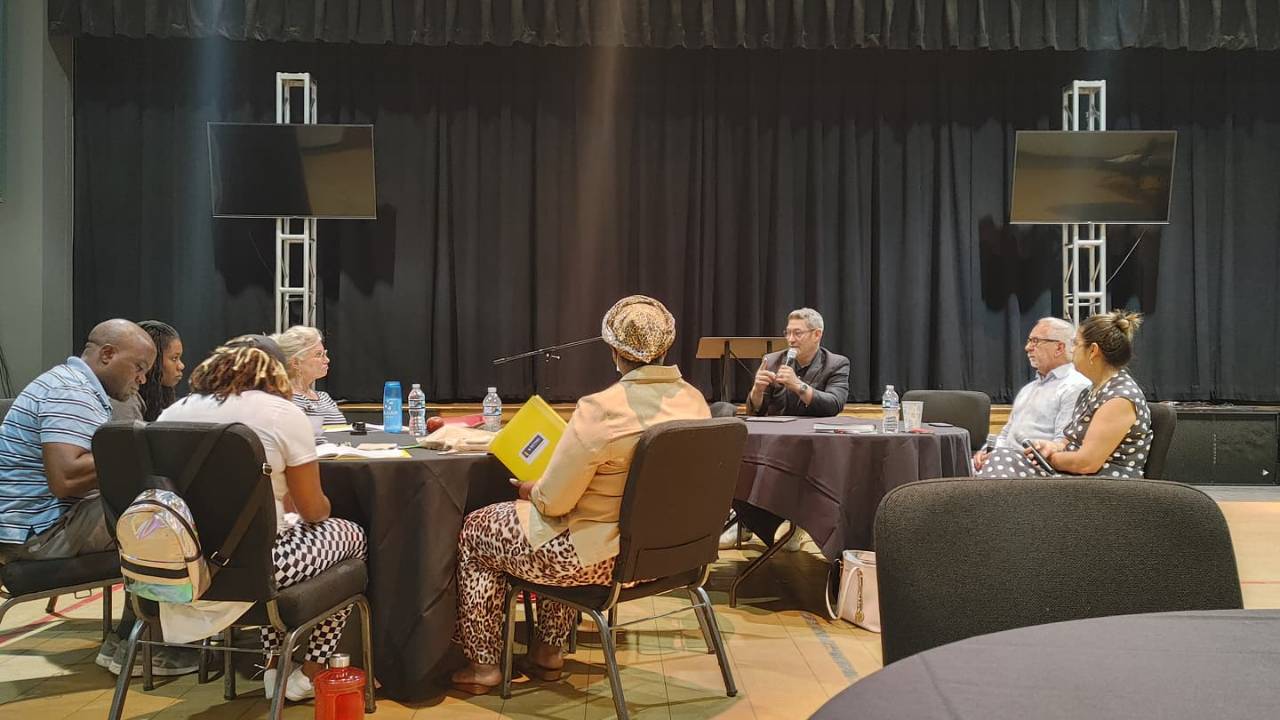
Aug 26, 2026I stared at the seven people seated in front of me and internally sighed. I knew there were hundreds more people in my church—professionals working in secular fields—who would benefit from this seminar. But there was no time to lament the numbers. If I truly believed what I was about to teach, I should be able to convey God's lessons to an audience of a thousand or an audience of one.
So, I jumped in, confidently:
Work doesn't exactly have the best reputation nowadays. Studies estimate that as many as 76% of employees are disengaged. Even if you love your job, someone is making fun of it, or trying to get away from it. For the next few hours, we're not going to talk about the "work" that leaves a bad taste in your mouth. We're going to talk about the God-given vision for who we are, and who we're called to be, at work.
What We Actually Cover:
Over the course of the seminar, we walk through the Theology of Work— including the Creation Mandate, the Redemptive Mandate, and the Apostolic Mandate—from the perspective of a non-theologian. God cares about work. He established it here on earth the moment He decided to create the world.
God didn't create us, this world, and our lives just so we could survive until retirement. The Bible doesn't describe a plan for simply escaping this world to get to heaven; instead, it describes—again and again—God's plan to redeem the world. Through story after story, we see Him intervene holistically in every sector of life, raise up leaders in fields far outside vocational ministry, and partner with them to change the very fabric of everyday life. His goal isn't for us to carry our careers alone. It's for us to partner with Him.
Four Shifts That Change the Way You See Work:
- Redemption — Recover God's call and love for work.
- Relationship — Let what God is doing in you overflow to others.
- Responsibility — Lead from identity rather than pressure.
- Reliance — Stop white-knuckling your way through Monday.
From there, we spend real time on the practicality of what this looks like in participants' own fields—drawing on examples and perspectives from a range of leaders across industries. The curriculum is built for people who aren't quite sure how to hold the real world and a deep, honest Christian faith in the same two hands.
Where the Curriculum Comes From:
The Work Matters Seminar was built out of four sources:
- My own story. I sustained a brain injury halfway through my medical training and had to learn, day by day, what it actually means to partner with God in my field—so that my medical setback didn't end my career.
- Broader research. I've studied more than thirty books in the marketplace ministry or faith at work space, drawing from different fields and perspectives.
- Formal training. I completed a two-year program in leadership and theological studies, along with attending the School of Campus Ministry, through my own church.
- Fifteen years in the field. I've spent the last fifteen years working directly with students, professionals, and mentors to understand what faithful ambition actually looks like in practice.
Why It Matters, Even at Seven Chairs:
I've talked with countless Christian professionals who quietly wonder if their work is spiritually meaningful. They love God, they want to make a difference, and most of the time they simply don't know how to connect the two. The biggest win from that first small session wasn't the size of the room—it was one participant who, every time he saw me over the following two years, told me the seminar had genuinely changed how he saw his career, and everyone needed to hear it.
Even if you're still growing, still praying, still waiting faithfully for the next step in your own career—it starts with choosing to faithfully serve one.
If You're a Pastor Considering This for Your Church:
The seminar runs in a single block of a few hours and works for groups of any size, from a handful of people to a full room—so a small first turnout is never a reason to hold off. It combines theological teaching (the three biblical mandates and the four shifts above) with practical, field-tested application, so professionals leave with something they can actually carry into Monday morning rather than just a framework. If you'd like to talk through scheduling it for your congregation, I'd love to connect.